
What if the most dangerous moment in DeFi is not signing a transaction, but misunderstanding what the transaction will do? A familiar token balance, a recognizable protocol, and a routine click can conceal a much more complicated sequence: contracts may approve spending rights, route assets through several pools, wrap or unwrap tokens, and leave the wallet holding something different from what the interface implied. On Ethereum and other EVM networks, the wallet is not merely a container for assets. It is the user’s last interpretive layer before code executes.
That is why transaction simulation has become an important security feature for multi-chain wallets. It does not make smart contracts safe by default, nor does it predict every possible outcome. Its value is narrower and more practical: it can translate a proposed interaction into an estimated state change before the user authorizes it. The result is a better question than “Does this website look familiar?” The better question is “What will this transaction attempt to change, and does that change match my intention?”
From signing messages to evaluating state changes
A blockchain transaction is often presented in deceptively simple language: swap, stake, mint, bridge, or claim. Underneath, the wallet may be preparing a call to a smart contract, a program deployed on a blockchain. That call can alter balances, create allowances, transfer non-fungible tokens, change a position in a lending protocol, or trigger additional contract calls. The visible button is a user-interface description; the contract call is the operational reality.
Simulation works by executing the proposed call in an environment that estimates how the relevant blockchain state would change without broadcasting the transaction as a finalized action. A useful interface can then show outcomes such as assets leaving the wallet, assets expected to arrive, approvals being granted, and fees being charged. This is not a screenshot of the future. It is a conditional result: if the transaction is sent with these parameters against a sufficiently similar state, these effects are expected.
That distinction matters because the blockchain is dynamic. A decentralized exchange pool can change between simulation and execution. A lending market can move toward a liquidation threshold. A contract can depend on an oracle update, block timestamp, caller address, or available liquidity. Simulation therefore reduces uncertainty; it does not eliminate it. The strongest mental model is not “the wallet guarantees safety,” but “the wallet gives me a pre-flight inspection of the transaction I am about to authorize.”
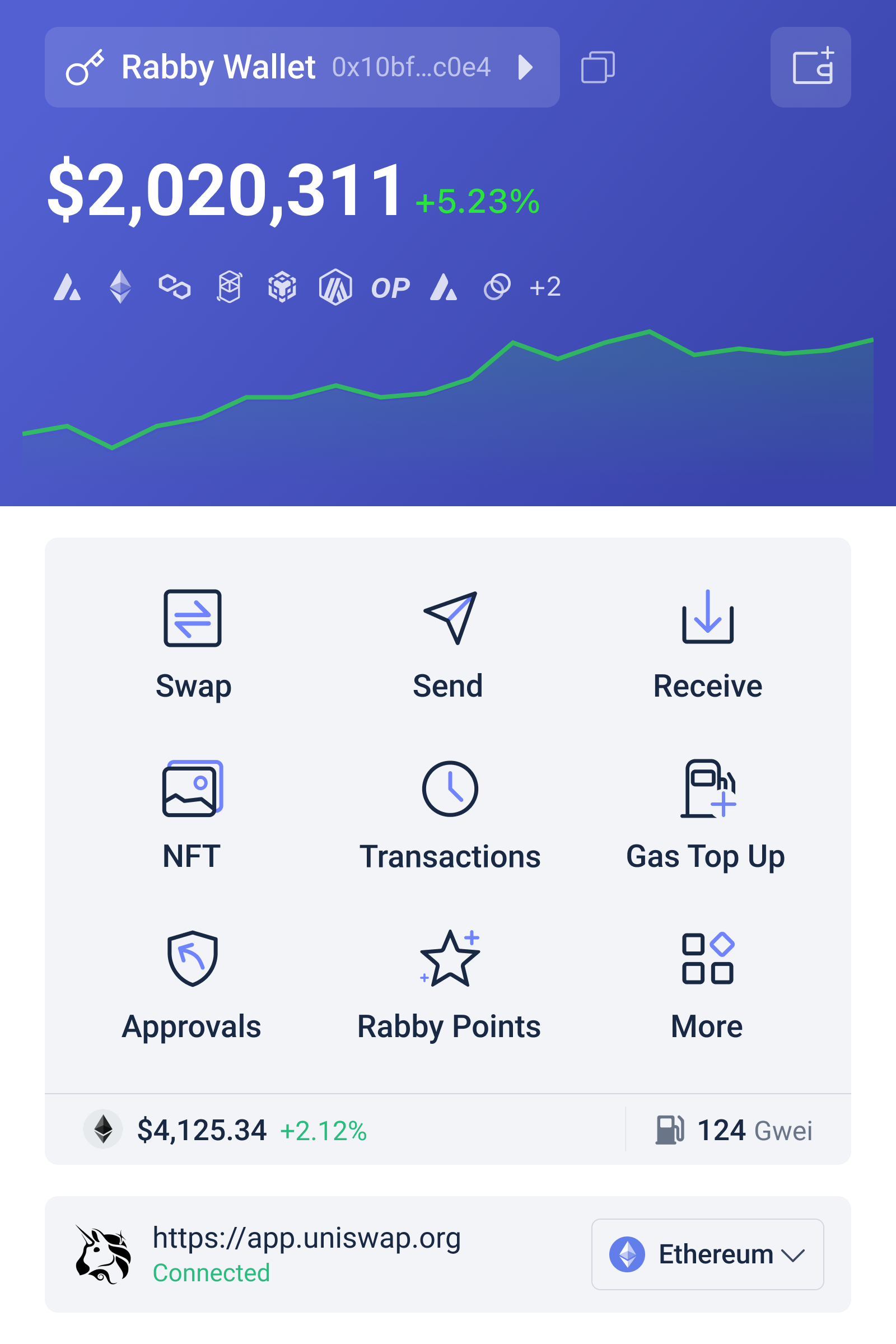
For users exploring an advanced rabby wallet experience across Ethereum and EVM networks, this inspection layer is especially relevant. A wallet designed for multi-chain use must help users distinguish not only between networks, but also between contract identities, token permissions, and the effects of actions that may look similar in a crowded DeFi interface.
Why multi-chain activity raises the cost of mistakes
Multi-chain wallets improve access, but they also increase the number of variables a user must track. Ethereum, layer-2 networks, and other EVM-compatible chains share many technical conventions, yet they do not share the same liquidity, fee markets, bridge assumptions, or contract deployments. A token symbol may appear on several networks without representing the same contract. A protocol name may be familiar while its deployment address, admin controls, or supported assets differ by chain.
This creates a subtle category error: users often treat “the same application on another chain” as equivalent to the original application. It may be functionally similar, but the security context can differ. The relevant questions include which network is active, which contract will receive the call, whether the asset is native or bridged, and whether the route relies on an intermediary. A simulation that clearly displays the chain and expected asset movements can expose some of these mismatches before funds are committed.
There is also a cognitive problem. Switching networks can make a transaction feel routine because the interface remains familiar. The wallet’s job is partly to restore friction at the moments when friction is useful. If a supposed token sale generates an unexpected approval, if a claim requests a transfer of unrelated assets, or if a bridge interaction produces an unfamiliar recipient, the interruption is information rather than inconvenience.
Three approaches to transaction safety
Raw wallet confirmation
The simplest approach is to display technical transaction data and ask the user to approve it. This preserves transparency for experienced developers, but it places a substantial interpretive burden on everyone else. Contract addresses, hexadecimal calldata, gas limits, and method signatures are meaningful only when the user can independently map them to an intended action. Raw confirmation is maximally close to the protocol, yet often weak as a human decision tool.
Website-level explanations
A decentralized application can explain its own transaction in friendly language. This may be useful, but it creates an incentive and trust boundary: the same interface that wants the user to approve an action is also describing that action. A compromised site, misleading prompt, or integration error can make a dangerous request appear ordinary. Website explanations are convenient, but they should not be the only interpretation layer.
Wallet-based simulation and warnings
A wallet can independently inspect the proposed call, simulate expected changes, and warn about suspicious approvals, unfamiliar contracts, or outcomes that do not align with the visible action. This approach improves decision quality without requiring every user to read contract code. Its trade-off is that the wallet must make judgments under incomplete information. A warning can be too broad and create alert fatigue; a clean simulation can be mistaken for a security certification.
The practical synthesis is not to choose one layer exclusively. The application provides context, the wallet provides an independent review, and the user retains responsibility for deciding whether the economic purpose is sensible. In high-value transactions, a hardware wallet, a small test transaction, verified contract addresses, and limited token allowances may still be appropriate. Security is layered because no single layer sees the entire problem.
Where simulation helps—and where it breaks
Simulation is particularly useful for detecting discrepancies between intention and effect. Suppose a user believes they are claiming a reward, but the simulated result shows a valuable token leaving the wallet. Or suppose a swap appears to return a stablecoin, while the wallet identifies a different token, a high-impact approval, or a contract interaction unrelated to the expected route. These are precisely the mistakes that interface familiarity can conceal.
However, simulation has meaningful boundary conditions. It may fail or become less informative when a contract depends on state that changes rapidly, external systems that are difficult to reproduce, private transaction ordering, or adversarial behavior after the simulation is generated. A transaction can also be economically harmful even when its technical result is accurately predicted. For example, the wallet may correctly show that a trade will execute, while the user has not noticed severe slippage, low liquidity, an unfavorable price, or a fee structure that changes the expected return.
Another limitation concerns approvals. A simulation may show that an allowance is being granted, but users must still understand its duration and scope. An approval can authorize a contract to spend a particular token later, potentially without another immediate confirmation. Where supported, limited allowances or revocation practices can reduce exposure, but they do not replace careful contract selection. Nor does revoking an approval reverse transfers that have already occurred.
Smart contract interactions also contain a temporal dimension. The same call can produce a different result as liquidity, prices, balances, or protocol parameters change. This is why transaction simulation should be treated as a snapshot-based estimate, not an oracle of intent or outcome. The closer the simulation is to execution, and the more stable the relevant state, the more useful it tends to be—but certainty remains impossible in an open, adversarial environment.
A practical review framework for DeFi users
Before signing, users can separate the review into four questions. First, identity: am I on the intended network, interacting with the intended contract, and using the expected asset? Second, effect: what leaves my wallet, what arrives, and what permissions are created? Third, economics: are the fee, slippage, exchange rate, collateral requirement, or bridge cost acceptable? Fourth, reversibility: if something goes wrong, can the action be undone, or is it an irreversible transfer?
This framework is more reliable than focusing on a single green checkmark or a familiar brand. It also scales across transaction types. A token approval emphasizes permission scope. A swap emphasizes price impact and received assets. A lending action emphasizes collateral, debt, liquidation conditions, and oracle dependence. A bridge emphasizes recipient contracts, finality assumptions, and the possibility that the destination asset is represented differently.
For larger positions, a sensible operating pattern is to use a separate wallet for experimentation, avoid unlimited approvals where practical, verify important contract addresses through more than one trusted route, and test unfamiliar actions with a small amount. These steps add friction, but that is the point. A multi-chain wallet can make navigation faster while still making consequential decisions slower and more deliberate.
What to watch as wallets become more interpretive
The recent emphasis on wallets for Ethereum and EVM networks reflects a broader shift in the role of wallet software. As users move across more chains and interact with increasingly composable protocols, the valuable feature is not merely key storage or network switching. It is interpretation: identifying what a transaction means in economic and permission terms.
If simulation becomes more accurate, more legible, and better integrated with contract warnings, users may rely less on superficial interface signals and more on expected state changes. That would be a constructive direction, provided wallets communicate uncertainty rather than presenting estimates as guarantees. The key signal to monitor is whether security tooling helps users make fewer high-impact mistakes without producing so many vague alerts that warnings become background noise.
Frequently asked questions
Does transaction simulation guarantee that a DeFi transaction is safe?
No. It estimates the effects of a proposed call under a particular blockchain state. It can reveal unexpected transfers, approvals, or contract behavior, but it cannot guarantee that the contract is honest, that market conditions will remain stable, or that the transaction will execute identically later.
Why is simulation especially useful in a multi-chain wallet?
Multi-chain activity increases the chance of confusing networks, token contracts, bridge representations, and protocol deployments. Simulation can make the expected chain, asset movements, and permission changes more visible before signing, helping users catch errors that a familiar-looking application may not reveal.
Should experienced DeFi users still review simulated results?
Yes. Experience improves interpretation, but it does not remove changing liquidity, malicious contracts, compromised interfaces, or unexpected approvals. Advanced users may inspect calldata and contract code, while simulation provides a faster behavioral summary. The two approaches complement rather than replace each other.
The central lesson is simple but easy to miss: a wallet should not only ask whether you want to sign. It should help you understand what signing authorizes. Transaction simulation is valuable because it moves security from appearance toward mechanism—from trusting a button to examining the state change behind it. In DeFi, that shift will not eliminate risk. It can, however, make the most preventable category of risk—the transaction that never matched the user’s intention—much harder to overlook.
Author